How marketing teams personalize videos at scale


Summarize with





Most marketing teams want to personalize videos at scale, but the math breaks down fast. Creating a few dozen custom videos manually? Manageable. Creating personalized videos for hundreds or thousands of customers? That requires either hiring a full video production team (expensive) or grinding through endless manual edits (unsustainable).
The real shift isn't about getting better at making one-off videos. It's about treating video personalization as a system you build once and run repeatedly. Instead of "how do we create this personalized video?" the question becomes "how do we build a template that generates dynamic videos automatically?"
This guide walks you through the complete framework: defining campaign goals, connecting the right data sources, standardizing templates, automating production, and distributing data-driven videos at scale. We'll cover both the strategic approach and the specific platforms marketing teams use to turn personalized videos into repeatable, scalable systems.
Why video personalization matters
Your customers already expect personalized experiences across every touchpoint. Video is the most engaging content format available, so when you send the same generic video to thousands of people, you're wasting the medium's biggest advantage.
We've seen personalized video consistently outperform generic alternatives across email campaigns, landing pages, and ad placements. The difference shows up immediately in the metrics: higher click-through rates, better conversion rates, and stronger customer retention when videos speak directly to individual viewer needs.
The gap becomes obvious when you look at what Tapni achieved. When customers designed a custom NFC business card but abandoned their cart, a generic follow-up email might remind them that their order was waiting. Instead, Tapni sent each abandoning customer a personalized video showing the exact card they had designed, their colors, their logo, and their layout, rendering automatically at scale through a video editing API. That's the difference between "don't forget your cart" and "here's the card you built, ready for you."
This is where dynamic video technology makes a real impact. Data-driven videos pull information from your CRM, marketing automation platform, or customer database to create thousands of unique versions without manual editing.
The math is simple, if you're sending video to 10,000 people, the difference between 2% engagement and 8% engagement is 600 additional prospects taking action. Personalization turns volume into an asset rather than just a broadcast number.
The challenge of marketing teams scaling video personalization
Here's the math problem every team hits: if a single personalized video takes 30 minutes to edit, creating 1,000 variations requires 500 hours of designer time. That's 12 full work weeks for one person, or three months of part-time effort alongside other projects.
Manual editing works fine for 10-50 variations. You can grind through that in a week or two. But once you're thinking about hundreds or thousands of dynamic video variations for different customer segments, the model breaks completely.
The budget reality makes this worse. Hiring enough video editors to manually create thousands of variations costs more than most campaigns can justify. You'd need a dedicated video production team just to keep up with a single personalized video campaign, and that's before considering your other content needs.
Most teams also assume video personalization requires coding skills or expensive enterprise software, which adds another layer of resistance. The technical barrier feels insurmountable when you're already stretched thin.
What actually works is treating this as a systems problem. You need a systematic approach to creating data-driven videos, combined with an automated video-editing workflow that streamlines production. You build the template once, connect your data, and let automation handle the variations for personalized campaigns.
That approach saves hundreds of hours compared to manual editing, and it's how teams go from creating dozens of videos to creating thousands without proportionally increasing headcount.
Framework for marketing teams who want to scale video personalization
The best way to think about video personalization at scale is to treat it like marketing automation. You're building a system once, then running it infinitely with data instead of creating videos one at a time. Here's the framework we've found works for marketing teams, personalizing videos for hundreds or thousands of people.
Define the goals of your campaign
Before you touch your videos or connect any data sources, you need to know what success looks like. Are you trying to boost email click-through rates? Improve ad performance? Drive higher conversion rates on landing pages? Strengthen customer retention?
The goal determines everything else: what data you'll personalize, which elements matter most in your template, and how you'll measure results. We've seen teams waste weeks building elaborate personalized video systems, only to realize they never defined success metrics upfront. Set your benchmarks before building anything. For example, what results would make this setup effort worth it?
You'll also need to determine your scale requirements here. Personalizing for 10 people? You can probably grind through manual edits. Personalizing for 100+ people? You need automation and a proper workflow. The scale question affects your tool choices and how much time you invest in template design.
Collect the right data
Personalization only works when you have clean, structured data to feed into your videos. Start by identifying your data sources:
- CRM systems like Salesforce or HubSpot, where contact details, deal stages, and company information live.
- Product analytics platforms like Mixpanel or Amplitude, which tell you how individual users interact with your product.
- Email lists and form submissions, which often capture intent signals like content downloads or demo requests.
- Customer databases, containing purchase history, preferences, and behavioral data
- E-commerce platforms like Shopify or WooCommerce, where order and cart data can trigger personalized follow-ups.
- Ad platforms like Google or Meta, which hold audience segmentation and engagement data you can pipe into retargeting videos.
- Webhook and API event data from your own app, useful for triggering videos based on real-time user actions, like Tapni did.
Then determine which specific data points you'll use for personalization. Common ones include viewer name, company name, location, product usage stats, account status, or behavioral triggers. You might personalize based on how many days someone's been a customer, which features they use most, or which pricing tier they're on.
Once you know what data you need, clean and structure it in a spreadsheet to video format (CSV or Google Sheets works perfectly). Use one row per video variation, with columns for each personalized element. Column A might be the recipient name, column B is the company name, column C is the specific metric you're highlighting, and so on.
The critical part is to verify your data quality before connecting anything to video templates. Errors in your spreadsheet mean errors multiplied across thousands of videos. Check for typos, missing values, formatting inconsistencies, and edge cases like unusually long company names or special characters that might break your template.
Standardize video template
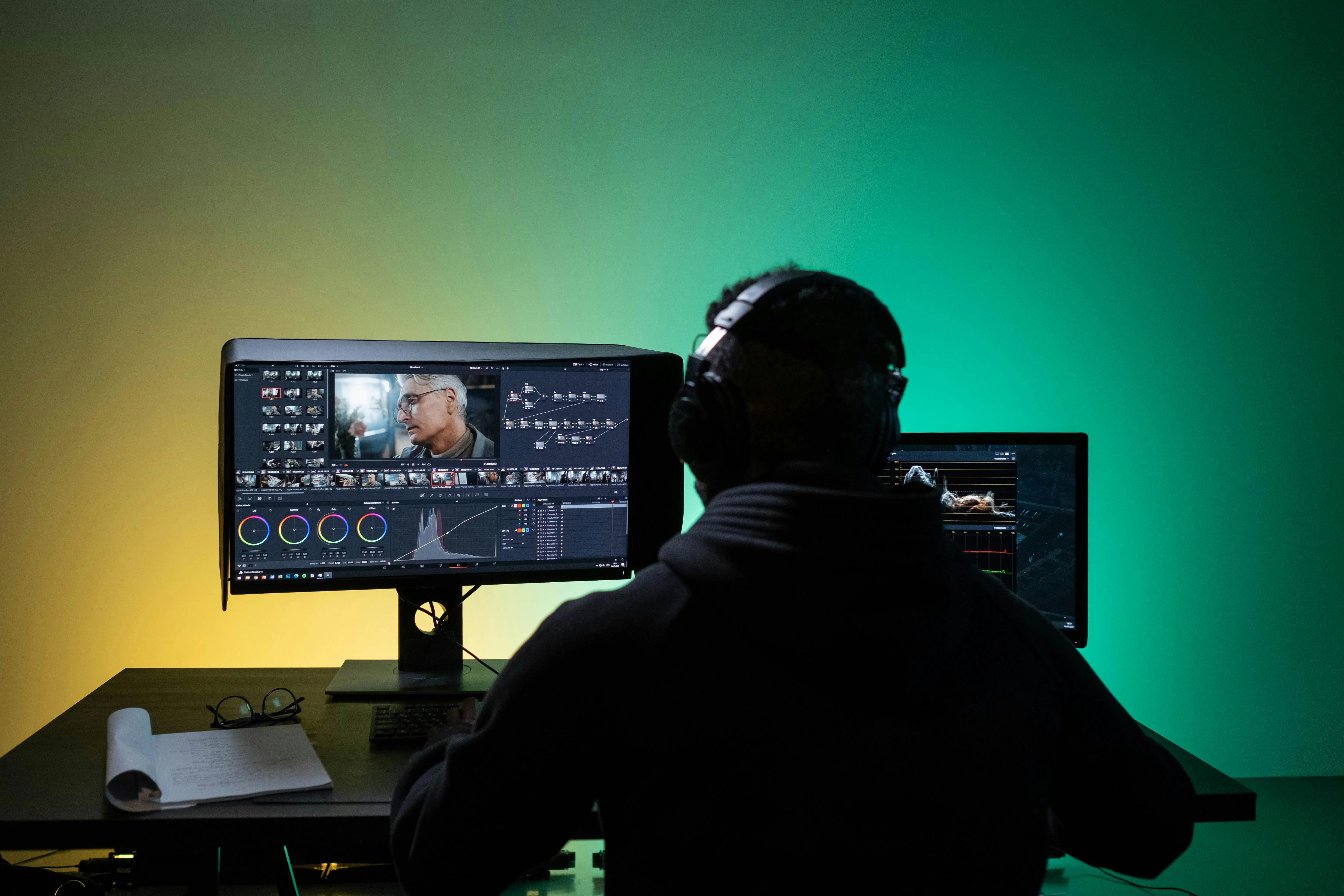
Create one master video template where specific elements like text layers, images, colors, and data visualizations are marked as dynamic. Most video editing and motion design tools work for this, but After Effects is the industry standard if you want the most flexibility and creative control. This is where personalized video technology connects your data to visual elements.
Design your template to accommodate variable data gracefully. Text layers need to resize automatically when someone has a long name. Image placeholders should accept different aspect ratios. Scenes need to work whether you're showing three data points or seven.
Test your template with extreme examples before rendering your full campaign. Plug in the longest name in your database, an unusually shaped logo, the highest and lowest numbers you'll display. If your template breaks with edge cases during testing, it'll definitely break during your actual campaign.
We've found it's better to keep templates relatively simple. A clean design with 3-5 personalized elements usually outperforms elaborate templates with 15+ dynamic elements. Consistency matters more than complexity, and every variation should look professional and on brand.
Automate video production
This is where dynamic video platforms come into play. You'll connect your data source to your video template using automation software designed for this exact workflow.
The technical process is straightforward you just map your spreadsheet columns to template elements. So, for example:
- Column A (recipient name) connects to text layer 1
- Column B (company logo) connects to image layer 2
- Column C (usage metric) connects to the animated number for layer 3
- And so on
Set your rendering parameters based on where these videos will be distributed. Email usually requires smaller file sizes and MP4 format. Landing pages can handle higher resolution. Data-driven videos for ads need specific aspect ratios depending on the platform.
Before rendering your full campaign, generate a test batch of 5-10 videos. Watch each one completely. Check that personalization works correctly, text is readable, numbers are formatted properly, and nothing looks broken. Catching errors in a 10-video test batch is way better than discovering them after rendering 1,000 videos.
Distribute your videos
Determine your distribution channels first: email campaigns, landing pages, in-app messages, sales outreach sequences, or dynamic video ads on social platforms. Each channel has different technical requirements and performance expectations.
The power of this approach is that you can automate delivery using integrations or APIs. Connect your video output directly to your email platform, CRM, website, or ad network. When someone fills out a form, they automatically receive their personalized video. When a prospect reaches a certain stage, your sales team gets a custom video to send.
Track performance metrics that matter: view rates, click-through rates, conversion rates compared to generic videos. We consistently see personalized videos outperform generic alternatives, but the magnitude varies by industry, audience, and how relevant your personalization actually is.
Iterate based on results. Test different personalization elements to see whether including the company name matters more than showing their specific usage data. Try different messaging approaches. Refine your template design based on what resonates with your audience.
Tools marketing teams use for scaling video personalization
Different tools serve different use cases depending on whether you need video automation, sales outreach personalization, or AI personalization. Here's how the leading platforms stack up.
Plainly Videos
Plainly is built for marketing teams that need full creative control over template design and want to produce hundreds or thousands of personalized video variations. It connects spreadsheet data or API data directly to After Effects templates and renders data-driven videos automatically without manual editing.
This fits exactly into the framework outlined above:
- Design your template once in After Effects
- Connect your data source
- Let the platform handle the rendering
It integrates natively with data sources like Google Sheets, Airtable, and Typeform, and can automatically distribute rendered videos to storage and publishing platforms like Google Drive, YouTube, Vimeo, and Amazon S3, with Zapier and Webhooks covering anything else in your stack.
Best for teams that already use After Effects and need to create high volumes of dynamic video variations while maintaining complete control over motion graphics and branding.
Sendspark
Sendspark focuses on AI-powered sales outreach with a strong emphasis on making personalization feel human at scale. Sales teams record one video and let the platform use AI voice cloning to insert each recipient's name, while dynamic backgrounds automatically display the prospect's website or LinkedIn profile behind the presenter.
It also allows combining a short personalized intro with a pre-recorded demo, keeping outreach personal without re-recording from scratch. The platform integrates with over 50 tools including HubSpot, Salesforce, Outreach, SalesLoft, and Clay, fitting directly into existing sales sequences.
Best for sales and marketing teams doing high-volume outbound personalization who want AI to handle the heavy lifting without needing custom motion graphics or complex template design.
HeyGen
HeyGen takes a different approach using AI-powered video generation with synthetic avatars and text-to-speech. You can create personalized videos without filming or traditional video editing by generating AI avatars that deliver your message.
It offers a lower cost entry point and works well for teams that want quick personalization without video production resources. The tradeoff is you're limited to AI avatar styles rather than custom branded motion graphics, so it works best when speed and budget matter more than fully custom creative.
From one-off videos to repeatable systems
When you treat every personalized video as a creative project, you'll always hit capacity limits. But when you build a system (templates plus data plus automation), you can personalize videos at scale sustainably.
We've found that teams who make this shift successfully follow a consistent pattern:
- Define clear campaign goals first
- Collect structured data that maps to those goals
- Build standardized video templates once
- Automate production with tools like Plainly
- Distribute strategically across channels
This approach turns video personalization from one-off projects into ongoing campaigns. Instead of manually editing 100 dynamic video variations for a single campaign, you're running multiple campaigns simultaneously because the system handles production automatically.
If you're ready to stop manually editing individual videos and start building repeatable systems, sign up for Plainly to see how template-based automation works for your specific use case.